Imagine a Connected, Responsive Shelf
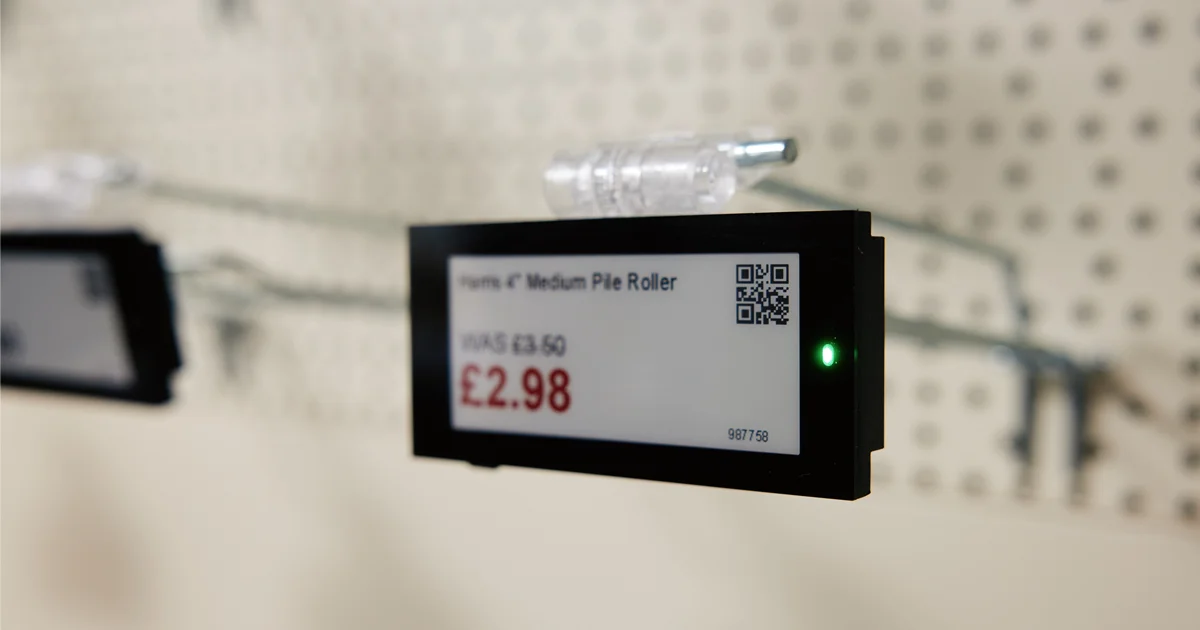
Imagine a shelf that displays more than price. With ESL, the shelf can become a digital touchpoint, connecting what happens on the shop floor with your wider systems. It can help direct store activity, trigger tasks and give colleagues clearer insight into what needs to happen next.
The connected shelf becomes part of the operational workflow, freeing up colleague hours, improving productivity, and creating a more responsive store. This changes the role of the shelf to one that not only supports pricing, but also availability, productivity, compliance, margin and growth:
1) Availability
A connected shelf can help retailers respond to availability issues before they become lost sales. With the right data, ESL can offer visibility of what’s happening at shelf level, while helping direct colleagues towards the action needed.
What Could This Look Like?
- Inventory visibility: Leverage multi-page functionality to display stock volumes, in-transit information or other relevant data, giving colleagues greater visibility without needing to leave the shelf.
- Gap and replenishment detection: Press the ESL button to flag a gap and add the product to a pick list in apps such as Retail IQ, speeding up replenishment.
- Automatic stock changes: Automate out-of-stock messaging based on stock data, refreshing when the product becomes available again. The label could also display a QR code or call to action to order online, minimising lost sales.
- Put-away-to-light: Link delivery data to ESLs, triggering the LED light to flash and guiding colleagues towards the product location, making replenishment faster.
- Availability investigation: Connect tools such as our Availability Checker to help colleagues identify and investigate stock discrepancies more quickly.
For customers, the benefit is simple: products are more likely to be where they expect them, when they want them. For retailers, better availability can mean fewer lost sales and less time spent unravelling problems.
2) Margin
ESL allows retailers to use pricing as an active commercial lever. The opportunity is not simply to change prices faster; it’s to respond intelligently to market conditions, stock levels and sales performance while reducing the operational workload for buying, merchandising and store teams.
What Could This Look Like?
- Dynamic pricing: ESL enables retailers to respond to changing conditions. Dynamic pricing doesn’t simply mean surge pricing when demand rises; it can also help retailers offer better value when circumstances change. For example, reducing the price of umbrellas when it rains could capture additional sales at a moment customers need the product. Clear rules around price changes can also be set, such as allowing prices to decrease but not increase during the trading day.
- Markdown optimisation: Analysis of sales and stock data gives retailers the flexibility to act in the moment, making markdown decisions in response to trading conditions rather than being locked into pre-planned promotions. Products selling ahead of forecast may not need a markdown, while overstock or slower-than-expected sales could prompt earlier action.
- Short shelf-life identification: ESL LEDs could be used to alert colleagues of products approaching their use-by date, helping reduce waste while creating an opportunity to reduce stock before the sales window is lost entirely.
- Pricing agility: Retailers could respond to changing costs, demand or sales performance with the ability to reprice products in the store.
- AI-enabled pricing: AI could bring together multiple data sources, such as sales against forecast, weather and stock levels, to inform pricing decisions and trigger actions based on defined rules.
The value goes beyond the labour saved by changing a price. It’s the commercial value of being able to respond faster and make more informed commercial decisions.
3) Compliance
When retailers are managing thousands of products across multiple stores, keeping shelf-edge information accurate and consistent is both an operational challenge and a compliance issue.
A connected shelf can help retailers identify discrepancies, maintain consistency and respond more quickly when requirements change.
What Could This Look Like?
- Pricing accuracy: ESLs directly reflect the latest pricing data, while price-change history can provide an audit trail to help investigate discrepancies and demonstrate when changes were made.
- Pairing and ranging: Visibility of which labels are paired and with what products helps retailers identify duplicates or gaps between what’s expected and the actual store setup.
- Planogram execution: A dedicated ESL per bay could be used to share planogram information, allowing colleagues to simply tap to view the latest layout on their handheld device.
- Flexible label design: Digital label templates make it easier to introduce or update information or business-required changes, without the time and cost associated with reprinting large quantities of labels.
- Legal compliance: Stay ahead of regulatory changes, such as loyalty pricing and unit pricing requirements, by enabling faster, more consistent implementation across all stores.
Compliance is not simply about avoiding penalties. Incorrect shelf information can lead to customer complaints, operational disruption and damaged trust. A connected shelf can make accuracy and compliance easier to maintain at scale.
4) Growth
The shelf can also become a commercial driver. As ESL technology has developed, the colour, imagery and content capabilities have also evolved, with retailers now able to engage customers in new ways at the shelf edge.
What Could This Look Like?
- Digital shelf-edge media: Larger ESLs could replace traditional promotional signage, allowing retailers to update messages, imagery and offers more often without the need for printed material.
- Personalised promotions: QR codes and NFC functionality support loyalty integration, connecting customers with relevant offers, member pricing or digital experiences at the shelf.
- Retail media opportunities: Digital shelf-edge space could become a new sellable advertising channel, enabling retailers to monetise space through relevant supplier messaging and generate incremental revenue.
- Connecting physical and eCommerce: With the same information and offers reflected across online and offline channels, the disparity is eliminated, and customers enjoy a joined-up experience that supports sales growth.
The result is a shelf that does more than communicate a price. It can influence the customer experience, connect physical and digital retail, and create new revenue opportunities.
From ESL implementation to Connected Shelf strategy
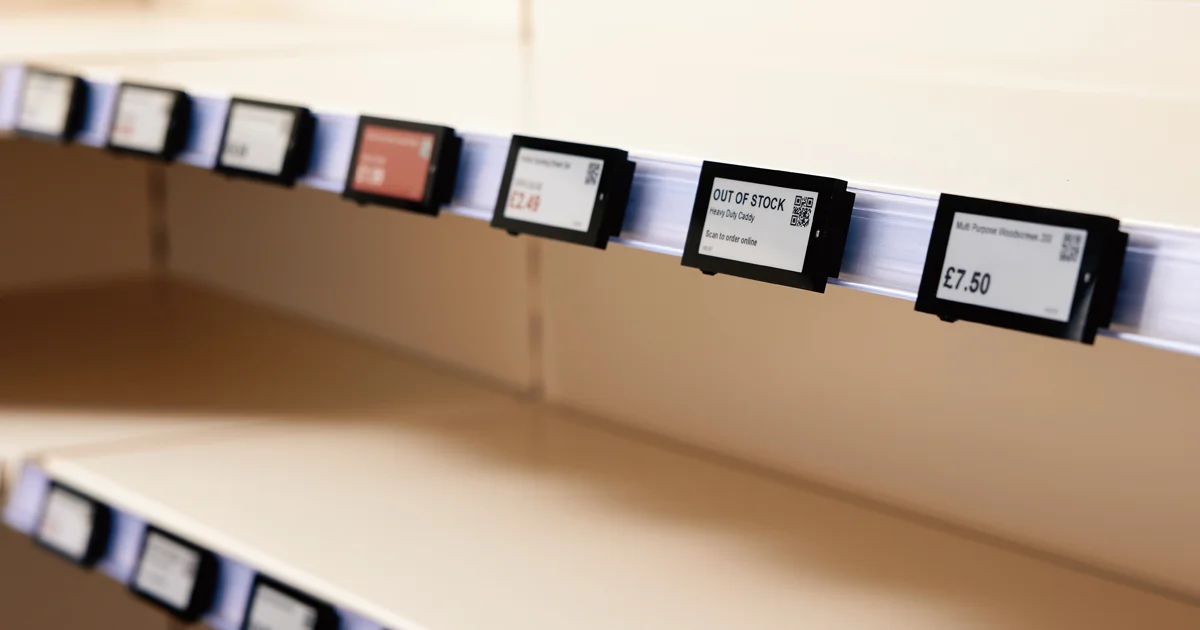
Retailers don’t need to move from basic price automation to a fully connected shelf overnight. The opportunity is to build on your existing ESL investment, expanding its value as business priorities and capabilities develop.
A phased approach allows you to establish the foundations before introducing wider applications:
- Today: Automate pricing. Reduce the time and effort behind price changes, improve pricing accuracy and establish a digital shelf-edge infrastructure.
- Next: Improve pricing and compliance. Use ESL to support more responsive pricing, better markdown decisions and faster, more consistent updates.
- Then: Connect store operations. Integrate ESL with inventory data and operational systems to improve availability, automate tasks and help colleagues prioritise their time.
- Ultimately: Create the connected shelf. Bring pricing, availability, compliance, colleague activity and customer engagement together to create a more responsive and productive store.
Each stage builds on the last. The right approach will depend on your existing systems, priorities and readiness to integrate new capabilities. Still, the principle remains the same: ESL implementation is a starting point for a longer-term strategy.
By planning for the wider opportunity from the outset, retailers can make decisions today that support future transformation.
Rethinking the ESL business case
The traditional ESL business case often centres on labour savings. Faster price changes, less manual work and improved pricing accuracy are tangible benefits that can help justify the initial investment. But they only tell part of the story.
If ESL is evaluated solely on that basis, retailers risk overlooking the wider operational and commercial value it could enable. A more complete business case considers the combined impact across the retail operation:
- Productivity: Freeing colleagues from repetitive tasks so they can focus on replenishment, customer service and other higher-value activities.
- Margin: Supporting more responsive pricing and markdown decisions that reflect changing costs, stock levels and sales performance.
- Revenue: Improving availability and creating new opportunities for promotions, customer engagement and retail media.
- Customer experience: Helping customers access accurate pricing, relevant information and the products they want.
- Operational efficiency: Connecting shelf activity with wider systems to reduce manual processes, identify issues sooner and improve decision-making.
Retailers should also consider the cost of maintaining the status quo. As labour costs rise and colleagues become harder to recruit and retain, manual processes carry an ongoing cost in time, resources and missed opportunities. There is also a commercial impact when poor availability, delayed markdowns or inaccurate shelf information affect sales and customer trust.
For retailers already considering or investing in ESL, the question should move beyond “How much can we save by automating price changes?” to “What else could a connected shelf enable across our stores?”
The real ESL business case goes beyond labour savings. It considers what the retailer can do differently when the shelf becomes connected.
Look Beyond the Label
Retailers that get the most from ESL will look beyond the electronic label itself and consider what becomes possible when the shelf connects pricing, inventory, store operations, colleagues, customers and digital commerce.
The future is not simply a shelf where price changes are automated. It is a shelf that can communicate information, respond to changing conditions and help trigger prioritised action. That is the potential of the Connected Shelf: turning a static display into a platform for better availability, productivity, margin, compliance and growth.
We’re here to help retailers explore these opportunities and understand how your ESL investment can support a wider transformation programme. Ready to look beyond price changes? Explore what a Connected Shelf could enable for your retail operation.